
The Last Men Standing: Omoyele Sowore, the Search for Gani Fawehinmi’s Heir, and the Quest for Gen Z’s Abami Eda
By abijohn.com
Mr Tonu Elumelu At the Conclusion of Nigeria’s Presidential Elections was Filmed Welcoming President Bola Ahmed Tiinubu to his Home immediately after the Election Results were Anoounced .
Declaring To Ahmed Bola Tinubu Aka Jagaban The Lion Of Bourdillion
LAST MAN STANDING !
Nigeria has never lacked people willing to complain about corruption. What Nigeria has repeatedly lacked are people prepared to pay a personal price for challenging it.
That distinction separates an ordinary political critic from an activist.
Nigeria once produced two extraordinary figures who operated in different arenas but ultimately fought a similar battle.
Gani Fawehinmi fought with the law.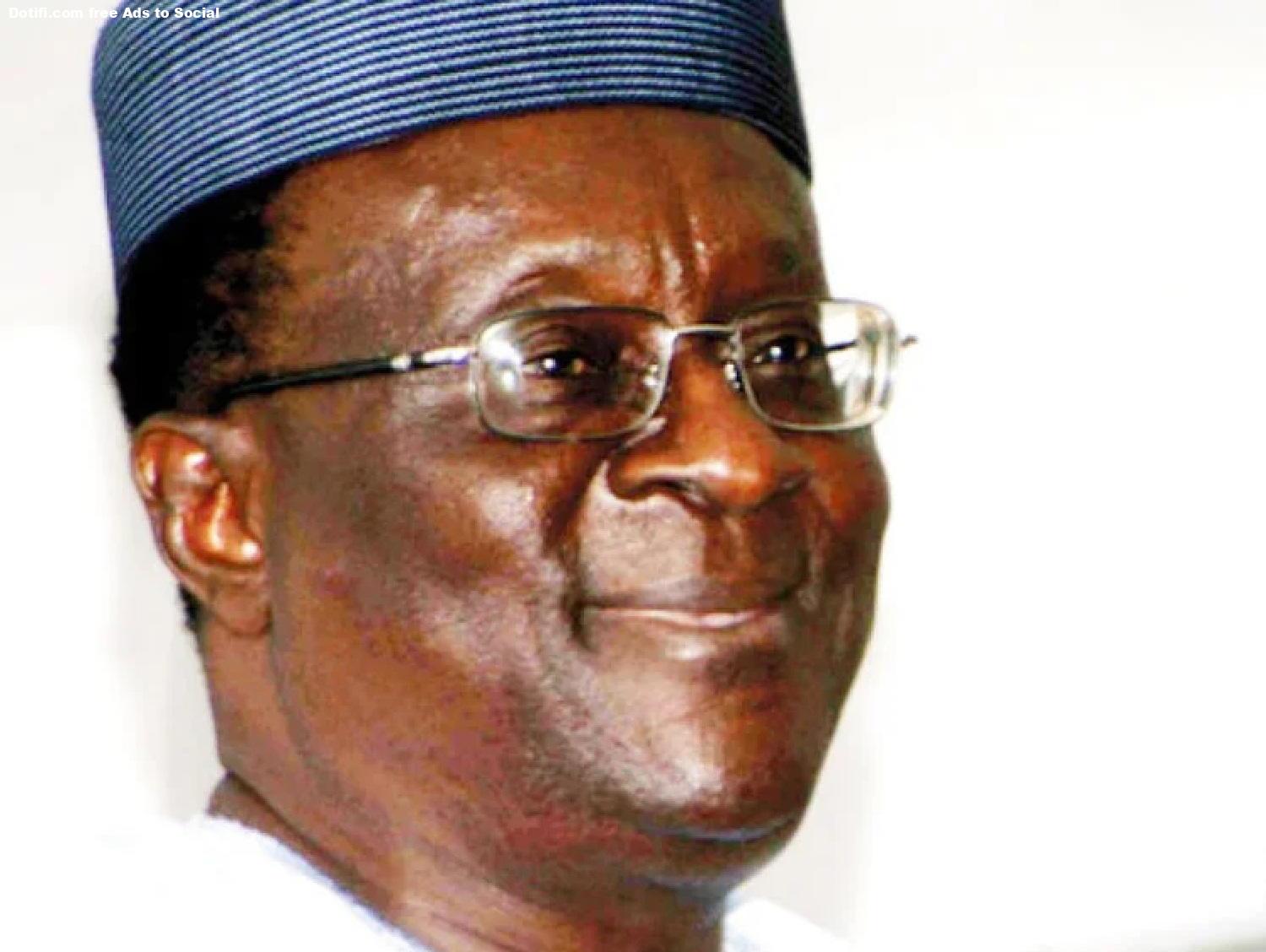
Fela Anikulapo-Kuti fought with music.
Fawehinmi confronted governments in courtrooms, newspapers and demonstrations. Fela confronted them from the stage, turning Afrobeat into a political weapon and the Afrika Shrine into something approaching a cultural parliament.
Today, another question confronts Nigeria:
Who are the heirs to these two traditions?
Is Omoyele Sowore the closest Nigeria has to a modern Gani Fawehinmi?
And among today’s musicians, can Davido become the kind of cultural force Fela was for an earlier generation—or are artists such as Falz, Burna Boy, Femi Kuti and others closer to the political-musician tradition?
The answer may ultimately be more complicated.
Nigeria may not be looking for one new Gani and one new Fela.
It may be producing an entire generation of them.
Gani Fawehinmi: The Standard Nobody Wants to Inherit
Gani Fawehinmi was not merely a lawyer.
He became a symbol of resistance to military dictatorship, corruption and abuse of power. His activism repeatedly placed him in conflict with successive governments.
That is what makes the comparison with contemporary activists so difficult.
To inherit Gani’s legacy isn’t simply to criticize a president.
It means being prepared to challenge whoever is in power, including people whose politics you may otherwise support.
Gani’s importance lay in his independence.
He wasn’t created by government.
He didn’t need government approval.
He built his reputation by representing people who frequently had little power themselves.
That is why the title “the people’s lawyer” became associated with him.
His legacy remains part of Nigeria’s democratic history and is frequently remembered alongside other major pro-democracy activists.
Fela Kuti: The Man Who Turned Music Into Opposition Politics
If Gani represented the legal conscience of Nigeria, Fela represented its cultural conscience.
Fela did something extraordinary.
He took music—which governments could dismiss as entertainment—and transformed it into political communication.
His Afrobeat attacked:
- corruption;
- military dictatorship;
- police brutality;
- political hypocrisy;
- colonial mentality;
- economic inequality;
- foreign influence;
- and the abuse of ordinary Nigerians.
Fela became so closely identified with resistance that his music remains part of Nigeria’s political vocabulary decades after his death.
His influence is still being celebrated internationally. In 2026, the Recording Academy posthumously awarded Fela its Lifetime Achievement Award, recognizing his enormous contribution to music and his lasting influence on African music.
And Fela’s legacy remains alive in Lagos. A major exhibition of his life and activism opened in Lagos in 2025, emphasizing not merely his music but his role as a political and cultural symbol.
This creates an extraordinary challenge for today’s musicians.
Can somebody become more than a successful entertainer?
Can an artist become the voice of a generation?
Omoyele Sowore: Is He Nigeria’s Last Man Standing?
Among contemporary Nigerian activists, Omoyele Sowore occupies an unusual position.
He has spent decades confronting political power.
His activism began during his university years, when he participated in student protests during military rule. He later founded Sahara Reporters, an investigative journalism platform that became known for publishing allegations and investigations concerning corruption and political misconduct.
He subsequently became associated with RevolutionNow, a protest movement demanding fundamental political and economic change.
His activism has repeatedly brought him into confrontation with Nigerian authorities. He was arrested in 2019 after calling for the RevolutionNow protests and has faced additional arrests connected to his activism.
Whether one agrees with Sowore’s politics is a separate question.
The important question for this article is:
Has he maintained an unusually consistent willingness to confront political authority?
That is the characteristic that makes comparisons with Gani Fawehinmi possible.
Sowore’s Great Contribution: Turning Journalism Into Activism
Sowore understood something that Fela understood decades earlier:
You don’t have to control government to influence government.
You need to control attention.
Sahara Reporters became part of a new Nigerian media ecosystem in which citizens could publish allegations and investigations without waiting for traditional newspapers to decide what was news.
That was revolutionary in its own way.
Gani had newspapers.
Fela had records and the radio.
Sowore had the internet.
The technology changed.
The battle remained remarkably similar.
But Is Sowore Really the New Gani?
Not completely.
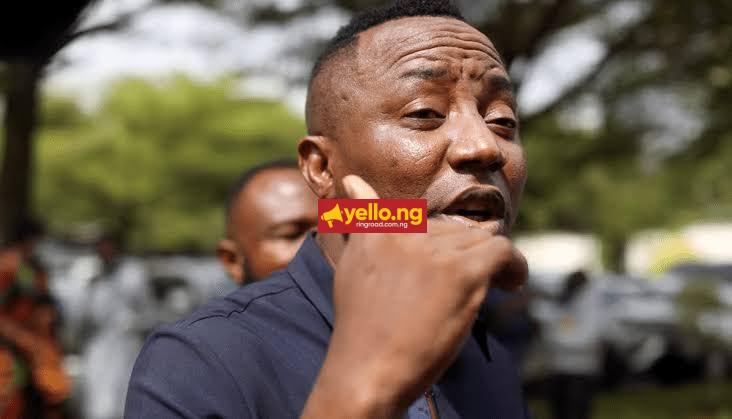
Gani was first and foremost a lawyer whose activism was deeply connected to litigation, constitutional rights and legal advocacy.
Sowore’s primary weapons have been:
journalism + protest + political organizing + digital media.
That distinction matters.
Sowore may be one of the closest contemporary figures to Gani in terms of confrontational independence, but he is not a carbon copy of Fawehinmi.
And perhaps that is precisely the point.
Every generation creates its own type of dissident.
The Search for Gani’s Heir
If Nigeria were conducting an imaginary competition for the title of “heir to Gani Fawehinmi,” the winner would not necessarily be the most famous person.
The question should be:
Who has consistently used his or her influence to demand accountability, defend rights and challenge abuses of power?
Here are 20 contemporary contenders, not as a definitive ranking but as a map of the Nigerian accountability ecosystem.
20 Present-Day Contenders
| # | Person | Principal contribution |
|---|---|---|
| 1 | Omoyele Sowore | Investigative journalism, protest politics and anti-corruption activism |
| 2 | Femi Falana | Human-rights law, constitutional litigation and civil liberties |
| 3 | Dele Farotimi | Legal activism, political criticism and advocacy for institutional reform |
| 4 | Aisha Yesufu | #BringBackOurGirls, #EndSARS and democratic activism |
| 5 | Oby Ezekwesili | Anti-corruption advocacy, public policy and institutional reform |
| 6 | Chidi Odinkalu | Human-rights advocacy and rule-of-law work |
| 7 | Deji Adeyanju | Civil-rights campaigns and political activism |
| 8 | David Hundeyin | Investigative journalism and scrutiny of political and economic power |
| 9 | Fisayo Soyombo | Undercover investigative journalism |
| 10 | Kiki Mordi | Investigative journalism and documentary reporting |
| 11 | Hamzat Lawal | Civic technology and public-budget accountability |
| 12 | Segun Awosanya (Segalink) | Police accountability and civic activism |
| 13 | Rinu Oduala | Youth organizing and #EndSARS activism |
| 14 | Aisha Osori | Democracy, political participation and women’s rights |
| 15 | Ebun-Olu Adegboruwa | Constitutional and human-rights advocacy |
| 16 | Matthew Hassan Kukah | Moral criticism of political leadership and governance |
| 17 | VeryDarkMan | Social-media campaigns around consumer and public accountability |
| 18 | Falz | Political music and youth civic engagement |
| 19 | Mr Macaroni | Youth civic activism and #EndSARS advocacy |
| 20 | Davido | Youth influence, civic visibility and political engagement |
These people operate in very different fields. Putting them on the same list doesn’t mean their philosophies or records are identical.
It means they represent different fronts in Nigeria’s struggle for accountability.
The 10 Who Came Before
The current generation didn’t invent Nigerian resistance.
It inherited a tradition.
1. Gani Fawehinmi
The lawyer who turned legal practice into a weapon against authoritarianism.
2. Fela Kuti
The musician who transformed popular music into political resistance.
3. Funmilayo Ransome-Kuti
A pioneering women’s-rights and anti-colonial activist.
4. Beko Ransome-Kuti
A major pro-democracy and human-rights campaigner.
5. Ken Saro-Wiwa
The Ogoni activist whose campaign connected environmental destruction with political and economic injustice.
6. Wole Soyinka
Writer, intellectual and long-standing critic of authoritarianism.
7. Olisa Agbakoba
Lawyer and human-rights advocate associated with democratic and constitutional reform.
8. Bamidele Aturu
Lawyer and activist who campaigned on labour, human-rights and constitutional issues.
9. Dele Giwa
Journalist whose career symbolized the dangers and importance of investigative journalism in Nigeria.
10. Aminu Kano
Politician and social reformer whose politics emphasized the interests of ordinary people and challenged entrenched privilege.
These figures represent different eras, ideologies and methods, but collectively they demonstrate something important:
Nigeria’s activist tradition is much older than social media.
Davido: Can He Really Be the New Fela?
Now comes the controversial question.
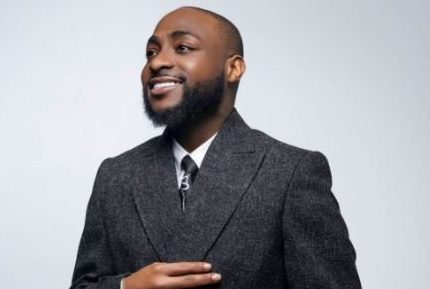
Davido.
Can he fill the enormous cultural shoes left by Fela?
The answer is:
He can inherit part of Fela’s influence, but not yet Fela’s political role.
And that distinction is enormous.
Davido has something Fela could never have imagined:
a global digital audience numbering in the tens of millions.
He can communicate with Nigerian youth around the world almost instantly.
During #EndSARS, Davido joined protesters in Abuja.
His song “FEM” also became associated with the atmosphere of the protests, with protesters adopting the song as an anthem.
That demonstrates enormous cultural power.
But Fela’s political identity was built around something much deeper.
Fela made political confrontation the central subject of his art.
Davido has not made that his central artistic mission.
That is the difference.
Davido Versus Fela
| Fela Kuti | Davido | |
|---|---|---|
| Primary weapon | Afrobeat | Afrobeats/pop |
| Political identity | Central | Secondary |
| Youth influence | Massive | Massive |
| Global reach | International | Truly global |
| Direct confrontation with government | Extensive | Occasional |
| Political songwriting | Central | Occasional |
| Cultural influence | Revolutionary | Enormous |
| Movement building | Afrika Shrine/Afrobeat culture | Digital/social-media ecosystem |
| Personal political risk | Extremely high | Considerably less |
| Potential | Political revolutionary | Global cultural mobilizer |
The distinction is not an insult to Davido.
It actually reveals the enormous standard Fela established.
The More Likely Musical Heir to Fela?
If the question is:
Who sounds most like Fela’s political tradition?
then Falz and Femi Kuti deserve particular attention.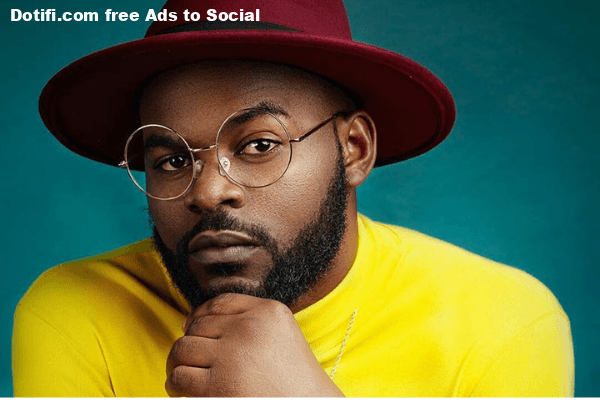
Falz has repeatedly incorporated political and social criticism into his music and public activism.
Femi Kuti, meanwhile, has the most direct musical inheritance: he is Fela’s son and has continued the Afrobeat tradition and its political messaging.
The Kuti family’s continuing influence is well documented, with Femi and Seun Kuti maintaining the Afrobeat tradition across generations.
But there is an important difference between being Fela’s musical successor and becoming Fela for Generation Z.
Those are not necessarily the same thing.
The Gen Z Abami Eda May Not Be a Musician
This may be the biggest lesson.
Fela emerged in an era when music was one of the most powerful ways to reach millions.
Gen Z lives in a completely different media universe.
Today, influence is distributed across:
- YouTube;
- podcasts;
- TikTok;
- Instagram;
- X;
- online journalism;
- documentaries;
- music;
- comedy;
- livestreams;
- citizen journalism.
The modern Abami Eda could therefore be:
a musician, journalist, comedian, activist or even a digital creator.
The battlefield has changed.
#EndSARS Was the First Major Demonstration of the New Model
The 2020 #EndSARS movement showed how dramatically Nigerian activism had changed.
It wasn’t controlled by one charismatic leader.
It was decentralized.
Young Nigerians used social media to organize demonstrations, document events and distribute information.
Research into the movement found that mobile devices played a major role in protest mobilization and reporting.
That is fundamentally different from Fela’s model.
Fela could become the central voice.
Gen Z can create thousands of voices simultaneously.
The New Nigerian Activist Is a Network
This may be the most important change since Gani and Fela.
Gani could go to court.
Fela could go on stage.
Sowore could publish an investigation.
Aisha Yesufu could mobilize protesters.
David Hundeyin could publish an investigation.
Falz could release a political song.
Mr Macaroni could turn comedy into civic commentary.
Hamzat Lawal could track public spending.
A social-media user with 100,000 followers can expose something to millions within hours.
The modern Nigerian accountability movement is therefore increasingly networked rather than hierarchical.
20 People, 20 Different Weapons
The battle against corruption cannot be fought with protest alone.
It requires multiple weapons.
| Battlefield | Examples |
|---|---|
| Courts | Falana, Farotimi, Adegboruwa |
| Investigative journalism | Sowore, Hundeyin, Soyombo, Mordi |
| Street activism | Sowore, Yesufu, Adeyanju |
| Youth mobilization | Rinu Oduala, Mr Macaroni |
| Music | Falz, Davido, Femi Kuti |
| Civic technology | Hamzat Lawal |
| Human rights | Odinkalu, Yesufu |
| Public policy | Ezekwesili, Osori |
| Social media | VeryDarkMan and numerous citizen activists |
| Moral authority | Kukah and other public intellectuals |
This is why searching for one person may be the wrong question.
The Real Enemy: Corruption, Nepotism and Tribalism
Nigeria’s problem isn’t merely that some politicians steal money.
The deeper problem is a political culture in which public institutions can become vehicles for:
family → friends → political allies → ethnic networks → party networks → patronage.
That is why corruption and nepotism are connected.
A society can have excellent anti-corruption laws and still remain corrupt if citizens believe:
“If my person steals, I will defend him.”
That is where tribalism becomes dangerous.
The real test of Nigerian activism should therefore be:
Can you condemn corruption when your own political, ethnic, religious or regional ally commits it?
That is the Gani test.
That is the Fela test.
And it is ultimately the Sowore test as well.
The Ultimate Test for the Next Gani
The heir to Gani Fawehinmi should not be determined by popularity.
The test should be:
1. Can they criticize their own side?
2. Can they defend an opponent’s rights?
3. Can they challenge a government they once supported?
4. Can they expose corruption regardless of tribe?
5. Can they reject nepotism when it benefits their own family?
6. Can they defend democracy when democracy produces an outcome they dislike?
7. Can they survive without government patronage?
8. Can they remain relevant without becoming a political godfather?
9. Can they put institutions above personalities?
10. Can they inspire young Nigerians to become citizens rather than spectators?
That is a much higher standard than simply becoming famous.
The Ultimate Test for the Next Fela
The modern Abami Eda would have to do something even harder.
He or she would have to turn entertainment into political consciousness.
Not simply:
“I am famous.”
But:
“What am I doing with the attention?”
Fela understood that attention was power.
The next Fela must understand that digital attention is power.
So Who Is the Heir?
If we divide the question into categories, the picture becomes clearer.
Closest to Gani’s confrontational activism:
Omoyele Sowore
because his career combines journalism, protest and direct confrontation with political power.
Closest to Gani’s legal tradition:
Femi Falana
because the courtroom remains his principal battlefield.
Closest to Fela’s political music:
Femi Kuti and Falz
because political commentary is much more central to their musical identities.
Closest to Fela’s global African cultural reach:
Burna Boy
because his international audience gives him extraordinary cultural influence.
Closest to Gen Z’s mass celebrity influence:
Davido
because his enormous audience gives him an ability to mobilize attention far beyond traditional political organizations.
Closest to the new digital activist model:
A combination of Sowore, Yesufu, investigative journalists and citizen activists.
But There Is a Problem With Crowning Anyone
The moment Nigeria crowns somebody:
“The New Gani.”
or
“The New Fela.”
the country risks creating exactly the kind of personality cult that these people challenged.
Fela didn’t tell Nigerians to worship politicians.
Gani didn’t tell Nigerians to surrender their conscience to one man.
Their deeper message was:
Think. Question. Resist injustice. Defend your rights.
Therefore, the greatest heir to Gani and Fela may not be another celebrity.
It may be the Nigerian citizen who refuses to defend corruption simply because the corrupt person belongs to his tribe.
Nigeria’s Next Revolution May Be Moral Rather Than Political
Nigeria has had military coups.
It has had elections.
It has had constitutional amendments.
It has created anti-corruption agencies.
It has changed presidents.
But the fundamental question remains:
Have Nigerians changed?
If corruption is condemned only when the opposition commits it, nothing changes.
If nepotism is condemned only when another tribe practices it, nothing changes.
If electoral fraud becomes acceptable because one’s preferred candidate benefited, nothing changes.
If government oppression is condemned only when one’s political enemies are arrested, nothing changes.
The country needs something deeper:
a culture of accountability.
The Last Man Standing May Actually Be the Nigerian Citizen
Sowore may be one of the most persistent individual activists in contemporary Nigeria.
Davido may be one of the country’s most powerful cultural influencers.
Fela remains one of Africa’s greatest political musicians.
Gani remains one of Nigeria’s most important human-rights lawyers.
But perhaps the future does not belong to another single heroic figure.
Perhaps the future belongs to millions of Nigerians who refuse to surrender their conscience.
The Gani of the future may be a lawyer in Port Harcourt.
The Fela of the future may be a musician in Benin City.
The Sowore of the future may be a journalist in Kano.
The next Aisha Yesufu may be a university student in Enugu.
The next investigative journalist may be publishing from a smartphone in Kaduna.
The next civic technologist may be sitting in a room in Lagos tracking government expenditure.
And the next Davido may have millions of followers but decide that celebrity is not enough.
The Final Question: Who Will Wear the Crown?
Nigeria is still searching for its next Gani Fawehinmi.
It is still searching for its next Fela Kuti.
And perhaps it is unfair to expect one person to fill either pair of enormous shoes.
Gani was a lawyer.
Fela was a musician.
Sowore is an activist and journalist.
Davido is an entertainer.
Falz is a rapper and social commentator.
Yesufu is an activist.
Farotimi is a lawyer and political critic.
Hundeyin and Soyombo are journalists.
Each occupies a different battlefield.
And perhaps that is exactly what Nigeria needs.
Not one Messiah.
Not one Abami Eda.
Not one People’s President.
But an army of citizens who refuse to be bought, frightened, tribalized or silenced.
Because the ultimate heir to Gani Fawehinmi is not the person who shouts the loudest.
And the ultimate heir to Fela Kuti is not necessarily the person who sings the most political songs.
The true heir is the person who can look at power, money, tribe, religion, celebrity and political loyalty—and still choose truth.
That is the crown Nigeria is looking for.
And perhaps the biggest question of Generation Z is no longer:
“Who is the next Fela?”
It is:
“Who among us is willing to become the Fela?”
Article Credit: abijohn.com
Sources
Omoyele Sowore background and activism
Council on Foreign Relations — Omoyele Sowore
Premium Times — Davido joins #EndSARS protest
#EndSARS research on Twitter mobilization
Associated Press — Fela Kuti receives Grammy Lifetime Achievement Award