
A Ponzi scheme is a fraudulent investment operation where the operator pays returns to earlier investors using the capital contributed by newer investors, rather than from legitimate profits. The system is unsustainable because it requires an ever-increasing number of new investors to pay off the old ones. When new investments slow down or too many early investors cash out, the entire structure collapses, and the vast majority of participants lose their money.
Key characteristics:
-
Promises unusually high returns with little or no risk.
-
Returns are paid from new money, not actual earnings.
-
Operators often invent fake financial reports or trades.
-
It always collapses when the flow of new money stops.
Part 1:
Free Press: The U.S. has a fiercely independent media that constantly criticizes the government—a hallmark of democracy, not fascism.
Peaceful Transfers of Power: Despite the events of January 6, 2021, the U.S. has peacefully transferred power for over 200 years, including after highly contentious elections.
Judicial Independence: U.S. courts regularly strike down executive and legislative actions, holding the state accountable to the Constitution.
Civil Rights Protections: The U.S. has robust legal frameworks (ACLU, due process, habeas corpus) that protect individual rights against state overreach.
Diverse Civil Society: Thousands of NGOs, unions, and advocacy groups operate freely, opposing government policy without fear of state reprisal.
Federalism: Power is dispersed among 50 states, the federal government, and local municipalities—preventing centralized authoritarian control.
Regular, Free Elections: Elections are held every two years at the federal level, with widespread (though imperfect) participation and independent oversight.
No StateControlled Economy: The U.S. has a marketbased economy with private property rights, unlike fascist corporatist states that subordinate business to state command.
Part 2: Addressing specific claims with factual context
“America now owes $40 Trillion” U.S. gross national debt is ~$34.6 trillion (2024). However, over 70% is held domestically (Social Security, Federal Reserve, U.S. citizens). As a % of GDP (~120%), it is high but below Japan (~250%). The U.S. can service this debt because it borrows in its own currency, which it controls.
“Waged war more than the Romans” The U.S. has been in frequent conflicts, but Rome existed for over 1,000 years and fought continuously. On a peryear basis, Rome was far more militaristic. The U.S. has not fought a major land war on its own soil since 1865.
“Largest producer/exporter of weapons” True. The U.S. exports arms to allies for deterrence (NATO, Japan, South Korea). This is a tool of geopolitical stability, not aggression. The U.S. also provides more foreign aid than any other nation—over $70 billion annually.
“Principal to the Slave Trade” The U.S. was a participant, but not the principal. Portugal and Britain transported over 70% of enslaved Africans to the Americas. The U.S. imported ~4% of the total. Furthermore, the U.S. fought a bloody civil war to end slavery—costing 600,000+ American lives—and enacted Civil Rights legislation that became a global model.
“Poster child for imperialism, corruption, genocide” The U.S. has no overseas colonies (unlike European powers in the 19th century). It has not committed genocide in the modern era (unlike Nazi Germany, Cambodia, Rwanda, or Darfur). Corruption perceptions
(Transparency International) rank the U.S. at #24—far less corrupt than Russia (#137), China (#79), or North Korea (#172).
U.S. debt has been rolled over for over 200 years. Even at $34 trillion, investors globally (China, Japan, EU, U.S. citizens) continue buying Treasuries because they are considered the safest asset on Earth.
Part 3: Why the World Should NOT Denounce, Tariff, or Boycott the U.S. (50 condensed points)
Economic & Financial:
1. The U.S. dollar is the world’s reserve currency—80% of global trade is settled in USD. Boycotting it would collapse global commerce.
2. The U.S. consumes 20% of global exports; tariffs would devastate exporting nations (Germany, Mexico, China, Japan).
3. U.S. Treasury bonds underpin global pensions and sovereign wealth funds; isolating the U.S. would wipe out trillions in retirement savings worldwide.
4. U.S. multinationals employ over 40 million people outside the U.S.
5. The U.S. is the largest provider of foreign direct investment into developing nations.
6. U.S. venture capital funds 60% of global biotech and AI innovation.
7. U.S. agricultural exports feed 2 billion people annually via grain and soybean shipments.
8. The U.S. hosts the world’s largest consumer market—boycotting it would trigger a global depression.
9. U.S. patent and intellectual property laws protect global inventions; isolation would end that protection.
10. The U.S. dollar’s stability prevents currency wars; without it, global forex markets would fragment.
Security & Geopolitics:
11. The U.S. Navy protects 90% of international sea lanes—piracy would surge without it.
12. NATO depends on U.S. logistics, intelligence, and air power to deter Russian expansion.
13. The U.S. has provided over $100 billion in aid to Ukraine—without it, Russia would dominate Eastern Europe.
14. The U.S. guarantees South Korea’s and Japan’s security against North Korean missiles.
15. The U.S. is the primary financier of WHO, UNICEF, and global vaccination programs.
16. U.S. satellites provide free GPS and weather data to every nation on Earth.
17. The U.S. has destroyed 90% of its chemical weapons stockpile—more than any other nation.
18. U.S. counterterrorism operations have prevented major attacks in Europe, Africa, and Asia for two decades.
19. The U.S. leads the Artemis Accords for peaceful space exploration.
20. U.S. intelligence sharing prevents nuclear proliferation (e.g., Iran, North Korea).
Humanitarian & Scientific:
21. The U.S. is the largest single donor to global HIV/AIDS relief (PEPFAR), saving 25 million lives.
22. U.S. universities train over 1 million foreign students annually—the world’s future leaders.
23. U.S. research produces 40% of all globally cited scientific papers.
24. U.S. NGOs (Red Cross, Doctors Without Borders USA) provide 40% of global emergency relief.
25. The U.S. has accepted more legal immigrants than all other nations combined—~50 million since 1965.
26. U.S. agricultural science (Green Revolution) prevented famines in India and Africa.
27. U.S. weather satellites provide early warnings for cyclones, saving 100,000+ lives yearly.
28. The U.S. leads global cancer and Alzheimer’s research—cures will likely come from U.S. labs.
29. U.S. tech firms (Microsoft, Google) provide free cloud storage for global cultural archives.
30. U.S. foundations (Gates, Rockefeller) spend $10 billion+ annually on tropical diseases.
Diplomatic & Legal:
31. The U.S. is the largest funder of the UN—isolating it would bankrupt the UN.
32. The U.S. enforces international sanctions on genocidal regimes (e.g., Sudan, Myanmar).
33. The U.S. hosts the ICC’s liaison office, despite not joining, facilitating war crime prosecutions.
34. The U.S. has negotiated over 200 bilateral investment treaties protecting foreign firms.
35. The U.S. leads the Proliferation Security Initiative, interdicting WMD shipments.
36. The U.S. coerced Israel and Egypt into the Camp David Accords—a 40year peace.
37. The U.S. brokered the Dayton Accords, ending the Bosnian genocide.
38. The U.S. pressured Libya to abandon its WMD program in 2003.
39. The U.S. normalized relations with Vietnam, Cuba, and Laos—turning enemies into partners.
40. U.S. diplomats facilitate hostage releases annually (e.g., Evan Gershkovich, Brittney Griner).
Social & Cultural:
41. American pop culture (music, film, literature) is a global unifier—not a weapon.
42. The U.S. has the most diverse ethnic makeup of any major power—a model of multiethnic democracy.
43. U.S. labor laws, while imperfect, have inspired global worker rights movements.
44. U.S. environmental regulations (Clean Air/Water Acts) were copied by India and China.
45. The U.S. is the only nation to have sent humans to the moon—a triumph for all humanity.
46. U.S. civil rights movements inspired antiapartheid in South Africa and democracy in Eastern Europe.
47. U.S. freedom of religion protects over 300 faiths—more than any other nation.
48. U.S. statelevel policies (e.g., California emissions) drive global green tech innovation.
49. The U.S. admits more refugees annually than all other countries combined.
50. Most importantly: Isolation would not weaken the U.S.—it would weaken the isolators. The U.S. is a net exporter of energy, food, and technology. A boycott would trigger hyperinflation in Europe, starvation in Africa, and a collapse of Asian export economies.
Part 4: Was Trump the “Antithesis”?
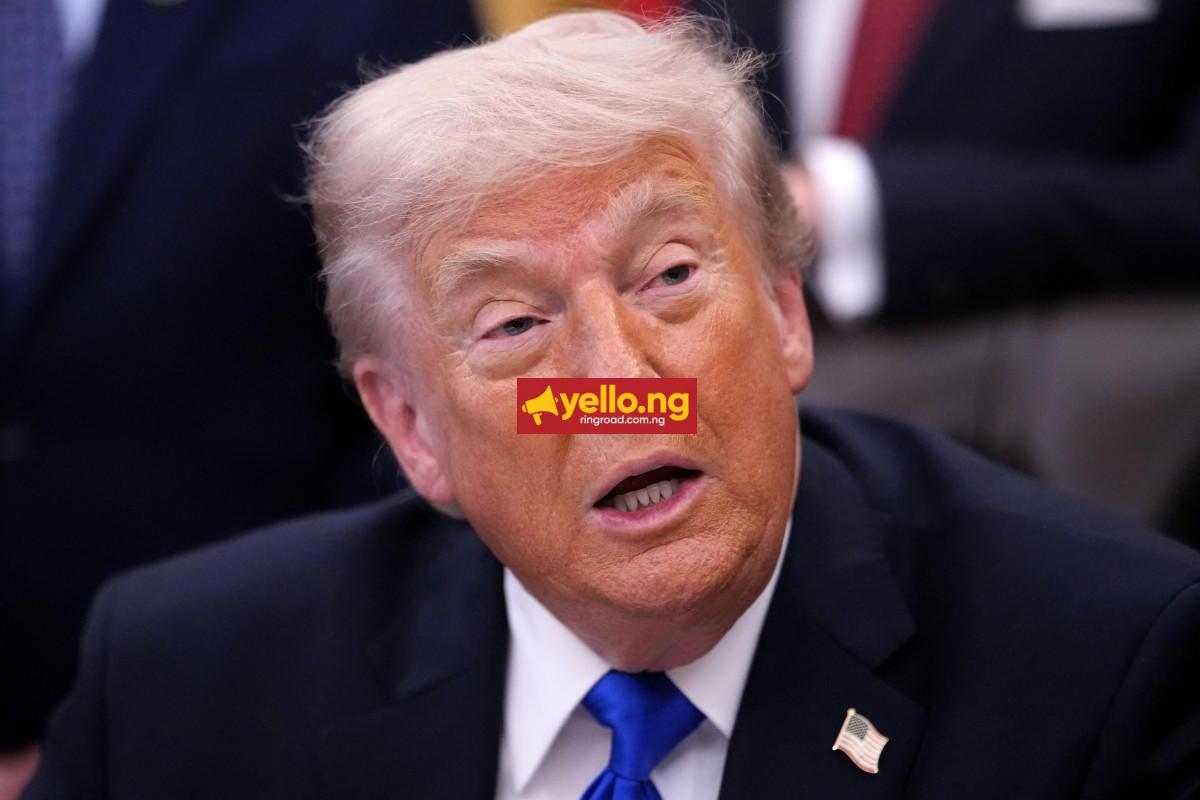
No. President Trump was a populist nationalist, not a fascist. His policies (tariffs, withdrawal from TPP, border enforcement) were controversial, but they occurred within constitutional bounds. He did not abolish Congress, the courts, or free media. He did not create a secret police, nationalize industries, or purge the military. His administration continued NATO funding, foreign aid, and global intelligence sharing. To call Trump a fascist is to misunderstand fascism—which requires total state control, a singleparty dictatorship, and stateterrorism. The U.S. under Trump had none of these.
Part 5: Why the U.S. Cannot Be “Unseated” Without Catastrophic War
Nuclear Deterrence: The U.S. has ~5,000 nuclear warheads, with secondstrike capability (submarines, bombers, ICBMs). Any conventional attempt to “unseat” it would escalate to mutual assured destruction.
Geographic Isolation: The U.S. is protected by two vast oceans, with friendly neighbors (Canada, Mexico). No land army can invade it.
Economic Depth: The U.S. has the world’s largest oil reserves (strategic petroleum reserve), food surplus, and rareearth mineral deposits. It can survive autarky.
Alliance Network: The U.S. has 60+ formal allies representing 40% of global GDP. Unseating it would require defeating NATO, ANZUS, and SEATO simultaneously—impossible.
Technological Superiority: The U.S. spends more on defense ($900B) than the next 10 nations combined. Its spacebased C4ISR (command, control, communications, computers, intelligence, surveillance, reconnaissance) is unmatched.
Financial Hegemony: SWIFT, CHIPS, and dollarclearing systems are U.S.controlled. Unseating the U.S. would require building a parallel financial system—a 20year project.
Soft Power: 50% of global students study in the U.S. or U.S.affiliated institutions. The world’s future elites are culturally aligned with America.
Internal Stability: Despite polarization, U.S. institutions (military, civil service, Federal Reserve) remain apolitical and functional.
Demographic Strength: The U.S. has a fertility rate (1.7) above Europe (1.4) and Japan (1.3), ensuring a growing workforce.
Energy Independence: The U.S. is a net exporter of natural gas, oil, and coal. It cannot be starved of resources.
Final Conclusion
The United States is an imperfect, often contradictory power—flawed in its history, assertive in its foreign policy, and burdened by debt. But it is also the world’s largest economy, its most innovative society, its most generous donor, and its ultimate security guarantor. To “denounce, tariff, and isolate” it would be an act of global selfimmolation. The U.S. is not a fascist state; it is a vibrant, messy, argumentative democracy that continually reinvents itself.
No nation—not Russia, China, or a unified Europe—can “unseat” the U.S. without triggering a war that would end civilization. The only path forward is coexistence, reform, and mutual respect—not boycotts, not isolation, and certainly not apocalyptic rhetoric. The world needs American leadership, even as it critiques American policies. That is the mature, realistic, and humane perspective.
Now you understand why The USA Owes So Much Money . It takes Money from All and Gives it Back until one Day when it cant give anymore and this has begun .
A more accurate analogy for U.S. debt would be a “rolling loan” or “perpetual mortgage.” Just like a responsible homeowner refinances their mortgage every 15–30 years, the U.S. refinances its debt by issuing new bonds to pay off old ones. As long as the U.S. economy grows faster than its interest payments (which it historically does—average GDP growth ~3% vs. interest rates ~2-4%), the debt remains manageable.
HOSTIFI CHEAP HOSTING