
10 min read
1,858 words
13 views
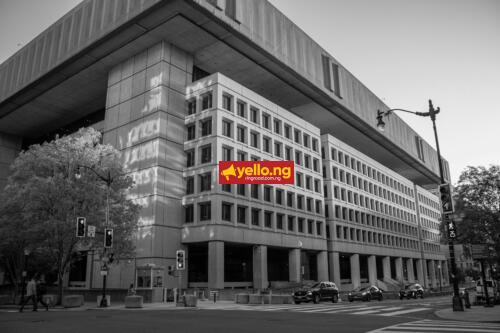
John Edgar Hoover was an American law enforcement administrator who served as the fifth and final director of the Bureau of Investigation and the first director of the Federal Bureau of Investigation. President Calvin Coolidge first appointed Hoover as director of the BOI, the predecessor to the FBI, in 1924
When the “Crazy” Ones Were Right: Historical Ideas Mocked as Nonsense That Later Changed the World
History is often written by the victors, but it is frequently revised by the vindicated. For centuries, the line between paranoia and prescience has been nearly impossible to draw in real-time. Ideas that challenged the established order—whether in science, corporate boardrooms, or the highest levels of government—were routinely met with open ridicule, institutional suppression, or outright dismissal as “conspiracy theories.”
Yet, as declassified documents, scientific breakthroughs, and historical hindsight have repeatedly shown, ridicule is not evidence of error. From continental drift to government mind-control programs, here is a look at the astonishing true stories of ideas once mocked that later changed history.
Part I: The Vindication of Scientific Visionaries
The scientific method is designed to correct itself, but the human element of the scientific community is often fiercely resistant to paradigm shifts.
In 1912, German meteorologist Alfred Wegener proposed that continents were once joined in a single landmass and had drifted apart. Geologists laughed him out of the room, dismissing him as an outsider. Wegener spent the rest of his life gathering fossil and climate data to prove his theory, dying on a Greenland expedition in 1930 still widely considered a crank. It took another 30 years and the discovery of plate tectonics for science to admit he was right. Today, his frozen body, still buried in Greenland’s ice, has drifted about 2 centimeters per year on the very tectonic plate he predicted existed.
Similarly, in the early 1980s, Australian doctor Barry Marshall insisted that stomach ulcers were caused by a bacterium (Helicobacter pylori), not stress or spicy food. The medical establishment called him reckless and refused to publish his research. In a stunning act of scientific defiance, Marshall drank a petri dish full of the bacteria, developed severe inflammation, biopsied his own stomach, cured himself with antibiotics, and ultimately won the 2005 Nobel Prize in Physiology or Medicine.
Nature itself has often been deemed a hoax by experts. When the first platypus specimen arrived in England in 1799, zoologist George Shaw took scissors to it, convinced it was a taxidermist’s prank with a duck bill sewn onto a beaver. He found no stitches. The platypus was real, laying eggs like a reptile, producing venom like a snake, and nursing its young through skin patches. Likewise, for centuries, sailors’ tales of the Kraken were dismissed as the rum-fueled hallucinations of seamen. It wasn’t until 2004 that Japanese researchers finally photographed a live giant squid in its natural habitat, proving the “myth” was just an animal exceptionally good at avoiding scientists.
Part II: Corporate Greed and Calculated Malice
While scientific ridicule often stems from institutional inertia, corporate dismissal of “conspiracy theories” has frequently been a smokescreen for deliberate, documented malfeasance.
For most of the 20th century, suggesting that corporations deliberately designed products to break faster was dismissed as paranoid. Yet, in 1924, the world’s largest lightbulb manufacturers (including General Electric, Osram, and Philips) formed the Phoebus Cartel. They secretly agreed to re-engineer bulbs to burn out after 1,000 hours instead of 2,500, imposing fines on any member whose bulbs lasted longer. They essentially invented modern planned obsolescence.
In the automotive world, the Ford Pinto scandal of the 1970s revealed a chilling corporate calculus. Ford knew the car’s fuel tank could turn it into a fireball in a rear-end collision. The fix would have cost $11 per vehicle. Instead, Ford ran a cost-benefit analysis, estimating that paying off wrongful death lawsuits for burn victims would be cheaper than recalling the cars. They chose the spreadsheet over human lives.
The food industry has a similar track record. In the 1960s, as research linked sugar to heart disease, the Sugar Research Foundation secretly paid Harvard scientists the equivalent of $50,000 to publish a review downplaying sugar’s risks and shifting the blame to dietary fat. This secret check shaped global nutritional advice for 50 years, leading to the “low-fat” boom that ironically flooded supermarket shelves with sugar-laden products.
Part III: The Dark Reality of Government Conspiracies
Perhaps the most unsettling category of vindicated “crazy” ideas involves the actions of governments against their own citizens or the global community.
During the Cold War, the U.S. military’s imagination knew few bounds. Project A119 was a top-secret Air Force plan to detonate a nuclear bomb on the surface of the Moon just to create a visible flash of dominance over the Soviet Union. The project was scrapped, but not before a young Carl Sagan was brought on to study the effects of a lunar nuclear explosion.
More sinister was Operation Northwoods. In 1962, the Joint Chiefs of Staff drafted a formal proposal to stage terrorist attacks on American soil—including hijacking planes and blowing up a U.S. ship—and blame them on Cuba to justify an invasion. President Kennedy rejected it, and the documents were classified for decades. Anyone suggesting the U.S. military would attack its own people was labeled a conspiracy nut until the files were declassified in 1997.
The CIA’s Project MKUltra is another stark example. Beginning in the 1950s, the agency conducted secret experiments to explore mind control, administering LSD and other drugs to unwitting subjects, including civilians, prisoners, and military personnel. CIA Director Richard Helms ordered the files destroyed, but a clerical error preserved 20,000 documents that blew the program wide open during 1977 Senate hearings.
Domestically, the Tuskegee Syphilis Study (1932–1972) saw the U.S. Public Health Service deliberately withhold penicillin from 600 African-American men to study the “natural progression” of the disease, resulting in needless deaths and congenital infections. Similarly, during the Manhattan Project, doctors secretly injected living hospital patients with plutonium at doses five times higher than considered safe, simply to study the effects.
Even the justification for major wars has been built on fabricated premises. For decades, questioning the Gulf of Tonkin incident (1964) was deemed unpatriotic. Yet, declassified NSA documents in 2005 confirmed that the second, unprovoked attack by North Vietnamese torpedo boats—which President Lyndon Johnson used to escalate the Vietnam War—never actually happened. Intelligence was manipulated to justify a predetermined response.
Part IV: Hidden Histories and Geopolitical Secrets
History is also replete with geopolitical truths that were dismissed as propaganda until the archives were opened.
Ernest Hemingway spent his final years telling friends the FBI was following him, tapping his phones, and reading his mail. His doctors diagnosed him with paranoia and subjected him to electroshock therapy, which destroyed his ability to write. He took his own life in 1961. Decades later, his FBI file was released under the Freedom of Information Act, revealing hundreds of pages of surveillance ordered by J. Edgar Hoover himself. The “paranoid” writer was the only one in the room who was right.
On the global stage, the CIA’s funding of the Dalai Lama was long dismissed by the West as Chinese Cold War propaganda. Declassified documents later confirmed that from the late 1950s to the 1970s, the CIA paid the Dalai Lama an annual stipend of $180,000 and funded paramilitary training for Tibetan guerrillas.
After World War II, Operation Paperclip saw the U.S. intelligence community actively scrub the records of over 1,600 German scientists, including Wernher von Braun, a committed Nazi and SS member who used concentration camp labor to build V-2 rockets. He was brought to America and celebrated as the father of the U.S. space program. Similarly, the U.S. granted full immunity to the architects of Japan’s Unit 731, a covert biological warfare program that conducted horrific vivisections and plague experiments on live human subjects, simply because their data was deemed too valuable to lose.
Even the origins of World War II were shaped by a lie. The Soviet Union aggressively denied that the 1939 Molotov-Ribbentrop Pact with Nazi Germany contained any secret agreements. It wasn’t until 1989 that the full truth emerged: a secret protocol in which Hitler and Stalin literally drew a line across Eastern Europe and divided it between themselves.
Conclusion: The Burden of Proof
The stories of Alfred Wegener, Barry Marshall, Edward Snowden, and countless others share a common thread: the establishment’s first instinct is often to protect the status quo by mocking the outlier.
The 33 historical instances detailed in this narrative serve as a powerful reminder that “conspiracy theory” is often just a pejorative term for a truth that is not yet convenient for those in power to admit. From the FBI tapping Hemingway’s phones to corporations engineering lightbulbs to fail, the record keeps producing new proof that the “crazy” people were sometimes the only ones telling the truth.
This historical pattern leaves us with a profound, lingering question: What is something you personally believe right now that most people think is crazy? What current narrative, dismissed today as fringe or delusional, will be confirmed by the declassified documents or scientific breakthroughs of tomorrow?
History suggests that the answer is already out there, waiting for the world to catch up.
J. Edgar Hoover never publicly identified as gay, but many historians and biographers believe he shared a decades-long romantic and domestic relationship with his top deputy, Clyde Tolson. [1, 2]
Because Hoover kept his personal life heavily guarded and destroyed many of his personal papers before he died, absolute physical proof of their private intimacy does not exist. However, the circumstantial evidence of their partnership is extensive. [1]
The Relationship with Clyde Tolson
Hoover and Tolson were inseparable partners for more than 40 years. [1]
- They worked together at the FBI during the day.
- They ate almost every meal together, spent evenings out, and took annual vacations together in California and Florida.
Public Hypocrisy and Persecution
- He led and enforced government policies that banned gay people from federal employment during the “Lavender Scare”.
- He gathered secret files on the private and sexual lives of politicians, judges, and presidents.
Debunked Myths and Rumors
- While his exact sexual orientation remains a subject of debate, most serious biographers focus on his profound emotional reliance on Tolson rather than unsubstantiated tabloid rumors