
• Decades of crashes, deaths and official warnings have failed to make one of Nigeria’s most dreaded highway corridors safe
By Beifoh Osewele
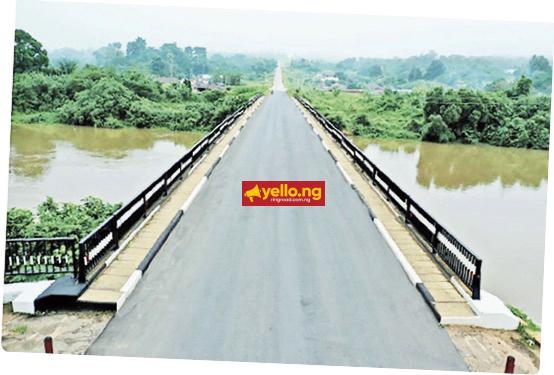
There is a point on the busy Benin–Sagamu Expressway, between the famous town of Okada and Ekiadolor, where conversations freeze, drivers tighten their grip on the steering wheel, while passengers who had been chatting or sleeping suddenly look ahead with apprehension, some clutching chaplets or tasbih beads and others muttering silent prayers as the vehicle begins its descent towards the Ovia River.
In Confusion, his 1975 album, Afrobeat legend Fela Anikulapo-Kuti portrayed Ojuelegba, the chaotic Lagos crossroads where vehicles, traders and pedestrians struggled for passage through seemingly interminable gridlock. But Ovia Bridge is more than a theatre of confusion. Here, confusion does not merely break bones; it mangles vehicles, maims travellers and abruptly ends journeys and lives. Its decades-long history is written in crashes, injuries and deaths—in the haunting words of another Fela classic: Sorrow, Tears and Blood.

Regular users know the history: buses disappearing into the river, tankers exploding, trucks crushing smaller vehicles and rescue workers searching the water for bodies. At Ovia, failed brakes, one bad manoeuvre, excessive speed or a momentary loss of concentration can turn an ordinary journey into a funeral.
Between April 10 and July 26, 2026—barely three and a half months—records from the Edo State Command of the Federal Road Safety Corps showed that 30 vehicles were involved in minor, serious and fatal crashes around the bridge corridor. The crashes involved 81 people, injured 19 and killed seven.
The figures cover only a short period in a long history of carnage that has survived successive governments, rehabilitation contracts, ministerial visits, parliamentary interventions and repeated promises of permanent action.
For commuters, Ovia Bridge is a frightening bottleneck on an already distressed highway network, made more dangerous by failed sections, potholes, flooding, broken-down trucks and gridlocks that sometimes last for days.
From the Benin–Sagamu road in the west to the Benin–Asaba corridor in the east, Benin–Auchi in the north and Benin–Sapele–Warri in the south, motorists endure bad roads, dangerous diversions, insecurity and journeys whose duration can no longer be predicted.
Benin City, historically one of Nigeria’s major transport gateways, is increasingly surrounded by highways of hardship. Ovia Bridge is the most terrifying symbol of that failure.
‘I dread that place’
Eugene Assien, who travels the route regularly, said the human and economic losses were difficult to quantify, but he was more troubled that the danger had persisted for decades.
“The lives and fortunes that have been lost on Ovia Bridge are humongous,” he told this reporter. “What baffles me is that the case has gone on for decades. It is a scary and deadly spot. I dread that place beyond what words can describe.”
One respondent said official neglect had compelled him to spend his own money repairing parts of the road—an individual effort that could scarcely match the scale of deterioration on the strategic federal highway.
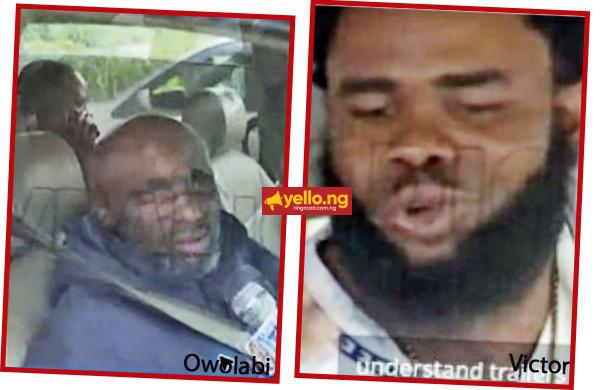
“Everybody passes through here. This is a major road for everybody, so the Federal Government should help us,” said Ibrahim Owolabi, a motorist. “The work is going on, but what I need is for it to be perfectly done. Both sides should be repaired so that there will be no hold-up.”
Victor Pilot, another motorist, described the corridor as a theatre of collisions, interminable delays and journeys whose arrival times could no longer be predicted. He had already spent more than three hours at one spot when he spoke.
“You see trailers colliding with one another and different accidents involving cars. It is always a very terrible experience here, every day,” he said. “I have been coming from Warri since morning. I am going to Lagos, but I do not know what time I will get there.”
Esther Oseghale, a trader who travels from Asaba to Lagos to purchase goods, has witnessed so many crashes that fear of the bridge has changed the way she moves her merchandise.
“My heart stops beating every time I think of that Ovia Bridge spot,” she said. “Because of that place, I have had to devise means of getting my stock through waybill.”
Their apprehension is supported by decades of accident reports, court records, official statements and warnings from road-safety authorities.
Memory that refuses to fade
For this journalist, the horror dates to the 1990s when, as a young reporter in the Features Department of the defunct National Concord newspaper, he was sent to Ovia following a collision involving a luxury bus travelling from Enugu to Lagos.
The bus burst into flames after colliding with a truck, killing several passengers.
Among the victims was a teacher travelling with her children to visit her husband, an employee of the Federal Radio Corporation of Nigeria who had been transferred to its transmission station in Ikorodu, Lagos.
This reporter met her at the accident ward of the University of Benin Teaching Hospital, where she was being treated for severe burns but did not know the whereabouts of her two children.
The assignment later took him to the morgue of the then Edo State-owned Specialist Hospital at Ring Road, Benin City, where dozens of charred bodies recovered from the crash were stacked as officials struggled to identify the victims and account for the dead.
More than three decades later, the memory remains. So does the danger.
History written in wreckage
A court record arising from a 1985 accident at Ovia River Bridge described how a vehicle was struck from behind and forced into the river. One occupant escaped by swimming to the surface and was rescued by a fisherman, while another was never seen alive again.
By the 1990s, the bridge had already acquired a grim reputation, but figures released years later showed that the carnage had continued.
In November 2011, then Zonal Commander of the FRSC, Yakubu Attah, said the Ovia Bridge area had claimed 268 lives between July and October of that year, describing many of the crashes as avoidable and calling for closer cooperation between road-safety and maintenance agencies.
That same month, 10 people were reported killed and more than 15 injured when two commercial buses collided while negotiating heavy traffic and a bad section of the road at the bridge.
By October 2012, the matter had reached the National Assembly, where then House of Representatives member Razak Bello-Osagie said 18 commuters had died two weeks earlier after a Toyota Hiace bus plunged into the river.
He also recalled the deaths of four lecturers of Igbinedion University, Okada, whose vehicle reportedly entered the river while avoiding an oncoming lorry, adding that rescuers searching for them had found other vehicles and human remains beneath the water.
In 2013, then Minister of Works Mike Onolememen directed the reinforcement of the bridge following recurring cases of vehicles leaving the carriageway and plunging into the river.
The casualties continued. In June 2015, two tankers collided and an FRSC recovery crane was deployed to remove the wreckage, but another tanker crashed into the crane during the operation and set it ablaze, burning three people beyond recognition. The accident scene had become another accident scene, the rescuers had become victims and the equipment sent to clear the wreckage had become part of it.
In June 2023, 11 people died and eight others were injured in a collision involving an articulated truck, an 18-seater Toyota Hiace bus and a Kia saloon car.
Then Edo State FRSC Sector Commander Paul Okpe confirmed the casualties. Eyewitnesses said the bus had slowed to negotiate a failed portion of the road before the truck rammed into it.
In September 2024, a commercial bus travelling from Lagos to Port Harcourt plunged into the Ovia River. Six people were rescued and bodies recovered, but days later, the bodies of two children from the same family, aged five and seven, were still missing.
In September 2025, a truck lost control around the bridge axis and rammed into five vehicles, including two Toyota Sienna buses, a Space bus and a mini truck, killing some occupants and injuring eight others.
Repairs that failed to last
Following mounting public outrage over the worsening state of the bridge, the failed section was shut down last month for rehabilitation, forcing traffic onto the long, winding and equally distressed Iguobazuwa–Okada road.
But the cycle of deterioration, public alarm and hurried intervention is hardly new; successive complaints by motorists and residents have repeatedly produced temporary repairs that failed to provide a lasting solution.
Previous remedial work offered momentary relief to travellers and residents who had endured prolonged delays, collisions and traumatic journeys, but road users, recalling how earlier repairs quickly failed, urged the authorities to undertake a comprehensive job.
Gateway surrounded by failed roads
Ovia’s danger has become part of a wider road crisis confronting commuters across Edo and neighbouring states.
Benin City sits at the intersection of highways connecting the South-South with Lagos, the South-East, the North and other parts of the Niger Delta. When one corridor fails, traffic pressure shifts to the others; when several deteriorate simultaneously, the region becomes trapped.
On the Benin–Asaba highway, commuters were recently stranded for days as trucks, buses and private vehicles became immobilised around failed sections, forcing travellers to sleep in their vehicles while transport fares, fuel consumption and journey times rose.
The road was concessioned in 2025 for expansion into a 10-lane highway, but the removal of asphalt from some sections before adequate drainage and alternative passage were provided worsened the hardship.
During an inspection in August 2026, Minister of Works David Umahi accused the concessionaire of lacking the technical capacity to execute the project, expressed anger over the removal of asphalt without proper drainage and apologised to motorists.
The crisis extends to the Benin–Sapele–Warri highway, where failed portions and gridlocks have stranded trucks conveying petroleum products, food, raw materials and manufactured goods, while immobilised motorists face the additional threat of robbery and kidnapping.
Commuters on the Benin–Auchi road have also endured failed sections, broken-down vehicles, dangerous diversions and insecurity, while flooding, potholes and damaged pavement repeatedly disrupt movement on parts of the Benin–Sagamu corridor.
In August 2026, the Federal Ministry of Works began assessing flood-affected sections around Ore after heavy rainfall disrupted traffic, identifying drainage and hydraulic failures among the problems requiring attention.
The pattern is stark: west of Benin lies the treacherous Ovia corridor; east lies the failing Benin–Asaba highway; south is the distressed Benin–Sapele–Warri road; and north is the troubled Benin–Auchi route.
It is no longer a collection of isolated bad spots but a regional mobility crisis affecting safety, security, commerce and the cost of moving people and goods. Ovia Bridge remains its most enduring symbol.
When gridlock becomes security threat
Even when nobody dies, a crash or broken-down truck around the bridge can trigger hours of suffering.
A motorist who identified himself simply as Ade encountered a massive gridlock around Ovia in March 2026 and, after reaching the bridge while travelling towards Benin, turned back to Okada Junction and took the old Iguobazuwa road, adding hours and substantial fuel costs to his journey.
“It was a harrowing experience,” he said.
Ugo, who has driven between Lagos and Onitsha for more than eight years, said he had slept on the highway “uncountable” times after crashes around Ovia brought traffic to a standstill.
“That spot is just as unpredictable as it is deadly. It is endless crises and headaches,” he said.
Drivers once escaped through old forest roads, but kidnapping has made that option increasingly dangerous.
“We have told ourselves that it is better to spend three days on one spot than go into the bush because you want to avoid traffic and end up in the waiting hands of kidnappers. It is cheaper to sleep on the road than pay a huge ransom,” Ugo said.
A crash at Ovia can therefore immobilise commerce, increase fuel consumption, ruin perishable goods, delay emergency journeys and expose stranded travellers to criminals, turning a road-safety failure into an economic and security crisis.
Narrow bridge, dangerous approach
Ugo blamed the physical configuration of the road, particularly the sloping approach that funnels fast-moving traffic towards what motorists regard as a narrow crossing.
“I believe the problem can be solved by widening that bridge. It is too narrow,” he said. “The road is also crying for repairs. I don’t know why governments are not paying attention. Maybe they want a big man to die there before they act.”
Mystery around ovia
The frequency and severity of the crashes have encouraged supernatural explanations in communities around Ovia, where commuters speak of a blood-sucking demon, while some residents of the bridge neighbourhood believe an angry deity demands human sacrifices because construction of the highway disturbed a sacred site.
During this reporter’s visit in the 1990s, a man who identified himself as the chief priest of a local shrine claimed that the contractor ignored warnings about the route of the bridge.
“Where the bridge passed was a shrine,” he said, arguing that the construction violated the deity’s territory.
However, a road-safety officer interviewed during a clearance operation on June 26, 2026, after a tanker crashed and exploded on the bridge, killing at least three people, dismissed the supernatural theory and identified the sloping, funnel-shaped approach, poor road conditions and motorists’ conduct as the principal dangers.
The post Ovia Bridge where journeys end in tragedy appeared first on The Sun Nigeria.