

Drug cartels record string of major losses, arrests as NDLEA operatives intensify efforts to deal with wrongdoers
By Adebowale Johnson
May 2026 was a very bad month for illicit drugs cartels in Nigeria.
It was the month that the National Drug Law Enforcement Agency (NDLEA) and sister agencies taught them some hard lessons.
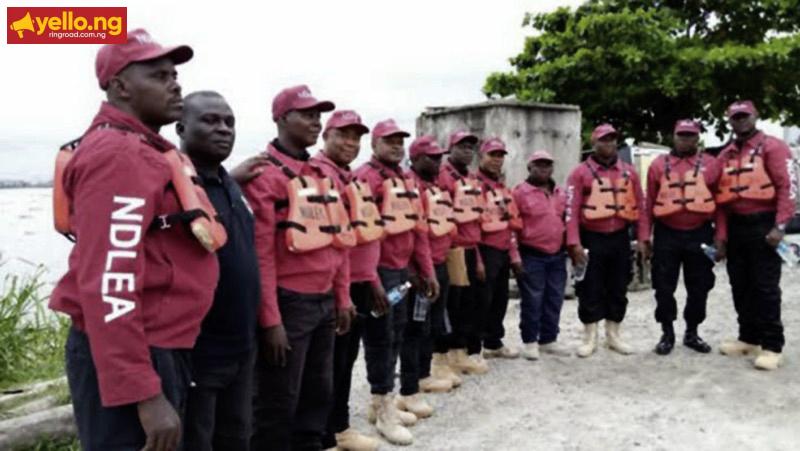
In May 2026, they made several high-profile busts, seizures and arrests. Key operations included uncovering Nigeria’s largest methamphetamine laboratory in an Ogun State forest and intercepting N5.8 billion worth of “Loud” (imported cannabis) in Lekki, Lagos.
The elite special operations unit of the NDLEA raided a clandestine methamphetamine laboratory in the Abidagba forest (Ijebu East Local Government Area of Ogun State) and a luxury residence in Lakowe, Lekki, Lagos and dismantled a major transnational methamphetamine cartel on May 16, 2026, arresting 10 suspects, including three Mexican nationals and seven Nigerians. The operation seized illicit drugs and precursor chemicals valued at over $362 million (approx. ₦480 billion).
The Mexican operatives, Martinez Felix Nemecto, Jesus López Valles, and Torrero Juan Carlos), were brought into the country to “cook” the meth, while the Nigerian cartel handled logistics and international distribution.
In addition to the forest laboratory raid, the NDLEA intercepted multiple transnational drug consignments. Earlier in the month, they discovered a high-profile international syndicate attempting to smuggle cocaine and opioids hidden within food flasks and false carton walls destined for Australia and the United Kingdom.
On May 17, operatives at the Murtala Muhammed International Airport (MMIA) in Lagos arrested a 63-year-old Chinese woman with 31 kilograms of high-potency “Canadian Loud” synthetic cannabis.
On May 8, officers raided a Lekki mansion in Lagos used as a stash house, recovering 2,326 kg of “Loud” valued at approximately ₦5.8 billion.
Persons with disabilities were also arrested between May 6 and 8. In a series of intelligence-led operations across Anambra and Kwara states, the agency arrested three individuals living with disabilities, including a 60-year-old man for trafficking substantial quantities of skunk and pharmaceutical opioids.
On May 6, NDLEA officials raided a makeshift drug production factory in Ijora Badia, Lagos, where two suspects were arrested for cooking cannabis and mixing it with other illegal substances (skuchies).
The agency intercepted 380 rounds of military-grade ammunition along the Abuja-Kaduna highway in Kaduna State and handed over the suspect and exhibits to the appropriate security agency for further investigation.
The agency disclosed that the ammunition was recovered from a 30-year-old suspect, identified as Sunusi Musa, during a patrol operation at Jere along the Abuja-Kaduna highway on May 24, 2026.
The agency also disclosed that its operatives have uncovered consignments of high-potency illicit drugs concealed in water purifier machines shipped from the Netherlands into Nigeria.
The agency volunteered that the intercepted shipment contained ketamine weighing 3 kilograms and 199 grams of MDMA (Ecstasy) pills, carefully hidden inside water purifier machines discovered at a courier company in Lagos on Tuesday, May 26, 2026.
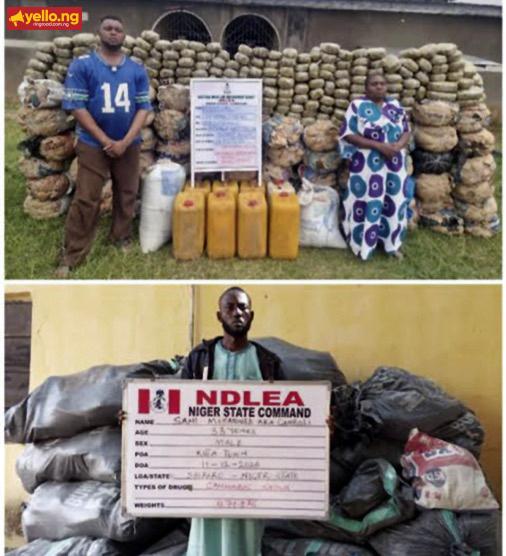
In a separate operation in Kaduna State, NDLEA operatives arrested a couple, Musa Sunday and Mercy Sunday, alongside another suspect, Salomi Ezekiel, 38, after seizing 100 jumbo bags of skunk with a total weight of 1,246 kilograms from a residence in the Gonin Gora area on Sunday, May 24.
The agency also reported another interception along the Abuja–Kaduna highway at Jere on the same day, where officers arrested a 30-year-old suspect, Sunusi Musa, in possession of 380 rounds of military-grade 7.62mm ammunition allegedly heading to Katsina State.
According to the NDLEA, the suspect and the ammunition have been handed over to the appropriate security agency for further investigation and action.
In Niger State, operatives acting on intelligence raided a warehouse at Gidan Kukah in Bosso Local Government Area, recovering 457 kilograms of skunk. A suspect, Godwin Zakka, 46, was also arrested at his residence in Gbeganu, Minna, in connection with the seizure.
In Enugu State, NDLEA officers on patrol along the Onitsha–Enugu expressway intercepted a commercial vehicle bound for Taraba State. A search of the bus led to the recovery of 22,000 tramadol pills, 100 ampoules of pentazocine, and 200 grams of bromazepam. The driver, identified as James Maigari Wisdom, was arrested.
The agency also said its commands nationwide continued its War Against Drug Abuse (WADA) sensitisation campaigns in schools, worship centres, workplaces, and communities during the week.
These outreach programmes included lectures at Government Secondary School, Adiabo in Cross River State; St Patrick’s Memorial College, Wukari in Taraba; Roman Catholic Mission Nursery and Primary School, Ibeju-Lekki in Lagos; and Kings Secondary School, Amawbia in Anambra State, among others.
These high-profile successes were praised by President Bola Tinubu, who commended the exceptional professionalism shown by NDLEA agents.
Meanwhile, a two-day National Drug Control Master Plan (NDCMP) Consultative Forum was organized in May in Abuja by the NDLEA
and its international partners, including the European Union (EU), the United Nations Office on Drugs and Crime (UNODC), and the Economic Community of West African States (ECOWAS). They assured the NDLEA of their support in combating substance abuse and illicit drug trafficking over the next five years.
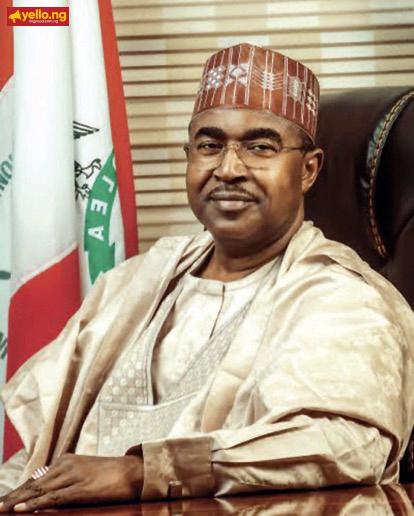
In his welcome remarks at the meeting, Chairman/Chief Executive Officer of NDLEA, Brig Gen Mohamed Buba Marwa (retd), according to the agency’s spokesman, Femi Babafemi, stated that while Nigeria may celebrate the milestones of the past five years, the nation must confront a sobering reality of a mutating threat.
His words: “UNODC projections suggest a 40% spike in drug use across Africa by 2030. Recent reports from the Global Initiative Against Transnational Organized Crime (GI-TOC) confirm that West Africa remains a high-pressure corridor for cocaine flows between Latin America and Europe. Our drug landscape is becoming increasingly complex as we battle the surge of synthetic substances and prescription drug abuse; the rise of poly-drug use and New Psychoactive Substances (NPS); the digitalization of the drug trade, where encrypted platforms and dark-web operations shield illicit assets from traditional law enforcement.
“As Africa’s most populous nation and largest economy, Nigeria cannot afford to be a passive observer. The risks to our youth, our workforce, and our national security are too high. This forum is therefore our battle room for the next five years. Our primary objective is to finalize the Zero Draft of the NDCMP 2026–2030—a roadmap built on the rigorous summative evaluation of our previous cycle.
“The new plan introduces two critical pillars to our strategy, that is: the Alternative Development and Sustainable Livelihoods that addresses the socio-economic drivers of the drug trade, as well as disrupting the illicit drug economy, using financial intelligence to choke the lifeblood of trafficking networks.”
While acknowledging the support of local and international partners especially the UNODC and ECOWAS in the production of the 2026-2030 NDCMP draft, the NDLEA boss urged the gathering of experts and participants to remember that the drug problem is not an abstract concept or a set of statistics but “a daily reality in our homes, our schools, and our streets. We are here not just as policy-makers and experts, but as parents, citizens, and guardians of the next generation.”
“Despite our different backgrounds, our goal is singular and that is a drug-free Nigeria. I urge you to use the next two days to think boldly. Challenge the status quo. Propose innovations. Your inputs will determine the trajectory of our nation’s safety for the next half-decade. I look forward to a final NDCMP 2026–2030 that stands as a roadmap of hope and promise for a safer, healthier Nigeria”, Marwa added.
Also speaking, Commissioner, Human Development and Social Affairs, ECOWAS Commission, Dr. Daniel Amankwaah said “the Nigerian master plan is so important to the ECOWAS Commission because it is out of it that we generate some of the contents for some of our member states. So, this is a very crucial moment for us and we are so happy that the support that we gave to the NDLEA has been well utilized and we can see the results. So, I want to just convey our message that ECOWAS Commission is ever ready and we are going to accompany you, not only to have this plan in place, but also during the implementation so that we will make our society safer.”
The European Union in its goodwill message delivered at the event by the delegation deputy head, Mr. Zissimos Vergos, expressed preparedness to assist Nigeria in its ongoing drug control efforts. According to him, “Our presence here today is that of partners who have walked this uphill and rough road ourselves, and we continue doing that. We have learned valuable lessons from them, and we believe deeply that Nigeria’s stability and Europe’s security are inseparable. What affects the youth of Maiduguri or the streets of Ibadan does not stay within Nigerian borders. Drug trafficking is a transnational challenge, and the master plan laid before this forum is Nigeria’s contribution to a transnational response.
“Nigeria has the talent, Nigeria has the institutions. Nigeria has the experience of having faced and surmounted enormous challenges before. What we have today is a roadmap, a new roadmap. We in the European Union, we are here as partners to build it together. I think we owe this to every Nigerian family that has been touched by addiction, by trafficking, by grief, or by the quiet despair of watching someone they love lose themselves. The same applies for every European family. Let us not leave this forum without giving them reason for hope. The European Union has also updated its drug strategy and action plan. One of its main pillars is stronger international cooperation. We are here today to affirm this.”
He commended the leadership and officers of NDLEA for their dedication. “In closing, I can only but commend the hierarchy and the staff of the National Drug and Law Enforcement Agency, their leadership, and all stakeholders for your dedication. I think together we can turn the master plan into tangible progress, saving lives, securing communities, and fostering a healthier, safer future for Nigeria, for West Africa, for the African continent, for Europe, for the world”, he added.
In his message to the gathering, UNODC Country Representative, Mr. Chiekh Ousmane Touré, noted that the world is currently witnessing a profound shift in drug landscape, particularly with the rise of synthetic drugs, the increased sophistication of trafficking networks and the use of technology to expand illicit markets.
“Nigeria stands at the intersections of this. This underscores the urgency of developing a master plan that is not only comprehensive and balanced, but also data-driven, forward-looking, and adaptable to emerging threats. UNODC remains fully committed to supporting Nigeria in this endeavor. Our partnership with NDLEA and the Government of Nigeria continues to grow from strengthening law enforcement capacity to advancing drug demand reduction to promoting evidence-based prevention and treatment, and enhancing international cooperation.
“As we look ahead, we see this master plan as an opportunity to deepen impact, to strengthen data systems, to reinforce institution across all levels of governance, and to ensure that the response is people-centered, inclusive, and sustainable. Let me assure you that UNODC will continue to stand with Nigeria as a committed partner, bringing global expertise, technical support, and shared vision for a safer and healthier society in Nigeria, West Africa, and in Africa”, the UN chief stated.
Since Marwa became the chairman/chief executive officer of the NDLEA) in January 2021, the agency has recorded a historic transformation, leading to his reappointment for a second five-year term extending his tenure until 2031
The post May: Bad month for bad guys appeared first on The Sun Nigeria.